


Quick Read
Sustainable Design – Evolving the DVF Framework (pt 1)
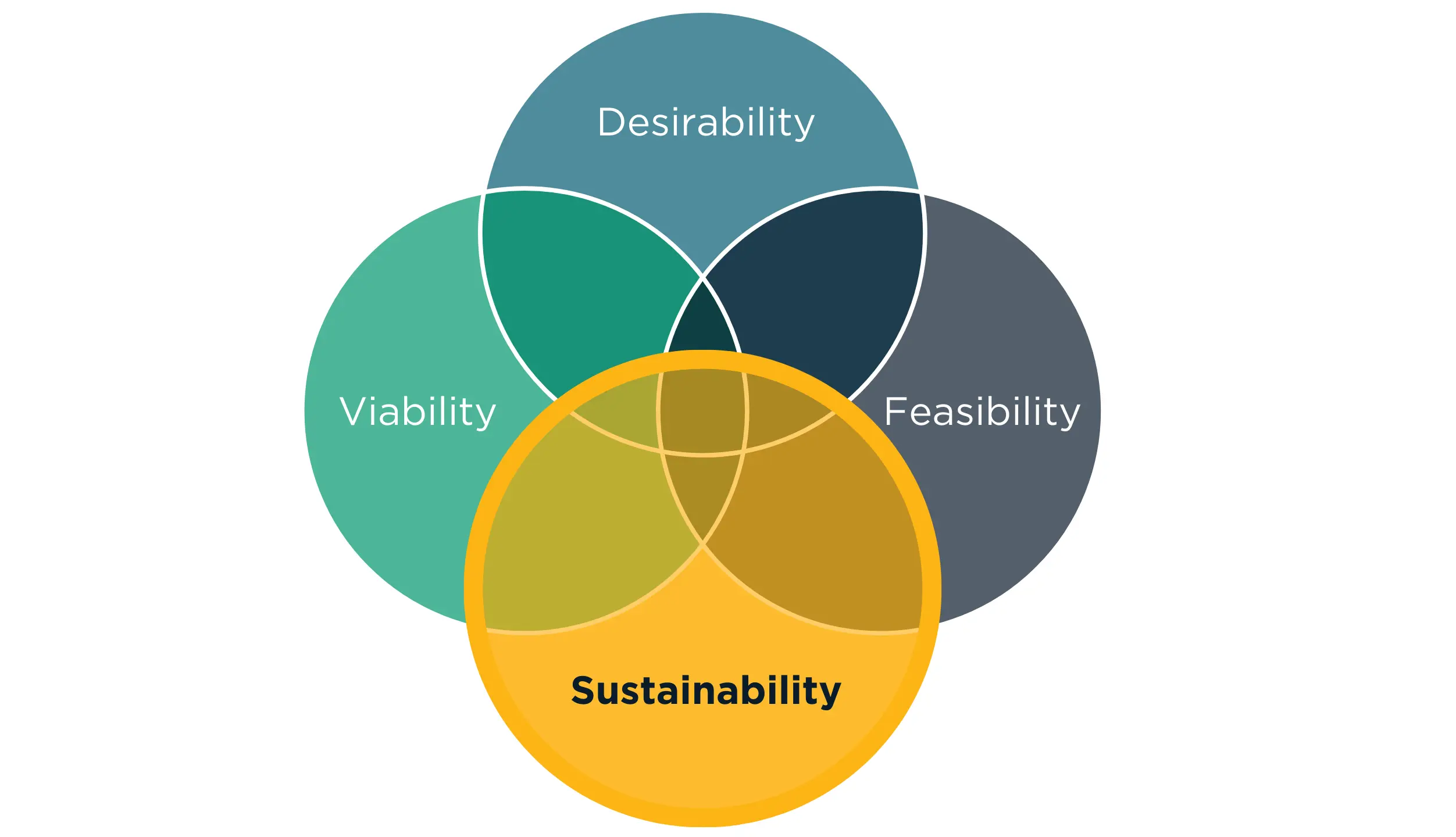
In this article, the first of a series on infusing Sustainability in Design, we will explore what it is and why it is so important, and why it should be included as the next evolution from the desirability, viability, feasibility (DVF) Framework to the DVFS Framework.
March 24, 2023

For decades, Desirability, Viability, and Feasibility have been words interconnected with Human-Centered Design and Design Thinking. These words guide teams to measure solutions by their ability to be something people want (desirability), something that provides positive business value (viability), and be something that can be done or created (feasibility). Made popular by IDEO and Stanford’s D.School, the DVF framework is now used by Design teams across the world and has been published in countless articles and books.
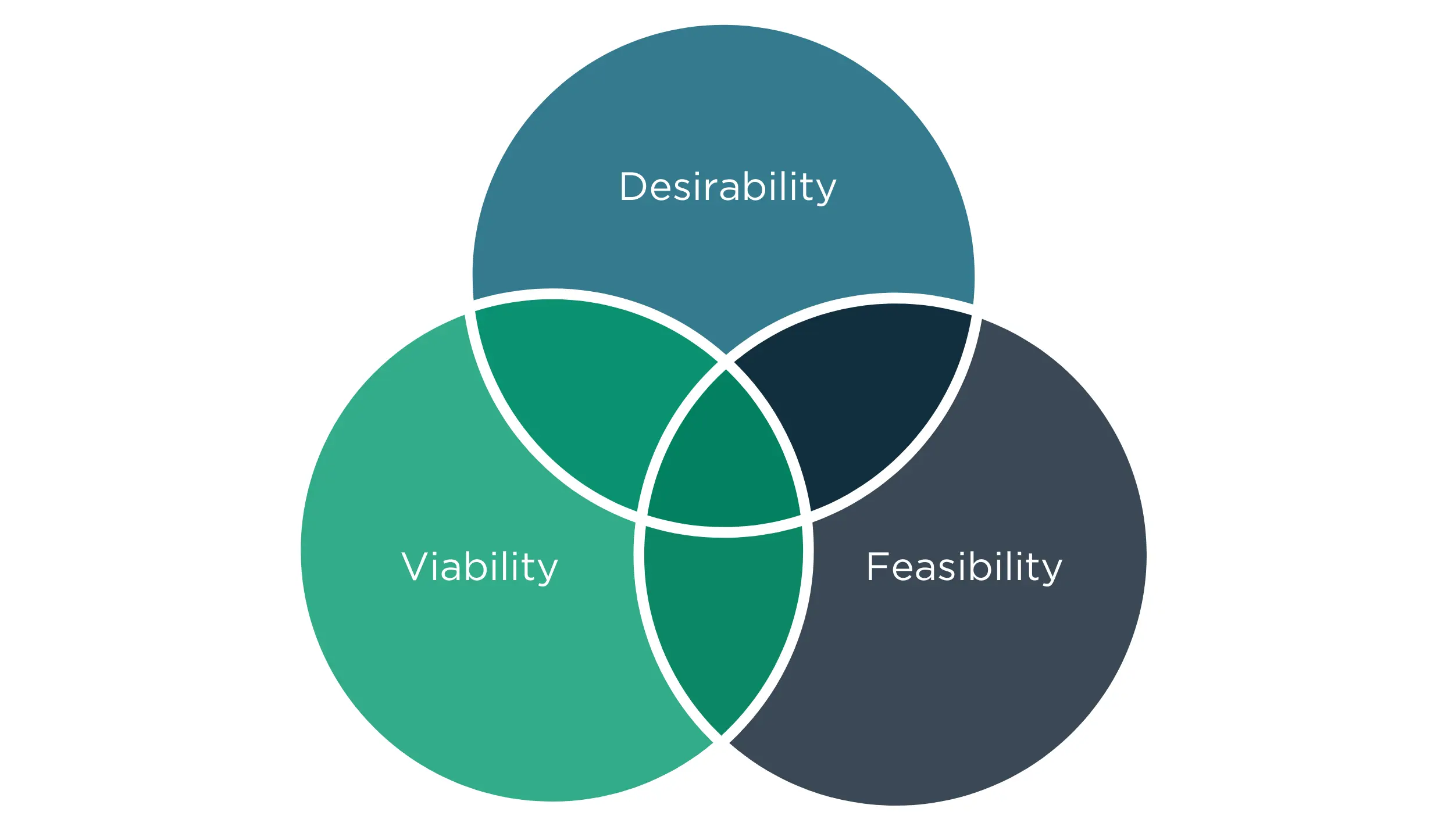
Much has changed since the DVF Framework was introduced in the early 2000’s. In this article, the first of a series on infusing Sustainability in Design, we will explore what Sustainable Design is and why it is so important, and why it should be included as the next evolution from the DVF Framework to the DVFS Framework.
Let's first begin by defining Sustainable Design.
In architecture, Sustainable Design seeks to reduce the negative impacts of structures. We think of Sustainable Design similarly, to minimize the adverse effects of services and products.
"But what does that mean?" I'm glad you asked.
I like to think of Sustainable Design as: the pursuit of balance within a holistic ecosystem required to deliver a meaningful experience that is responsible, ethical, and inclusive.
Lots of words there, so let me break them down into their parts and then bring them together to illustrate how we think of them.
- Ethical design: Designing products and services that align with the moral principles and values of an organization. This can include privacy, security, transparency, and fairness considerations. Ethical design seeks to minimize harm and maximize benefits to users and society.
- Responsible design: Designing products and services that are environmentally friendly, and long-term socially responsible. This can include reducing carbon footprint, minimizing waste, and promoting social justice.
- Inclusive design: Designing products and services accessible and usable by the broadest possible range of users, regardless of their abilities or disabilities. Inclusive design seeks to remove access barriers and ensure everyone can use and benefit from products and services. This can include designing for different physical abilities, sensory impairments, and cognitive differences, whether they be permanent, temporary, or situational.
Each is a discipline independently, yet incomplete without the others. You can be inclusive and still be unethical. You can be responsible and not inclusive.
In her book, Invisible Women: Data Bias in a World Designed for Men, Caroline Criado Perez shares examples of systems that have been designed around men with little to no consideration of women.
In the book, Cobalt Red: How the Blood of the Congo Powers Our Lives, Siddharth Kara uncovers the atrocities done to create eco-friendly innovations hidden from those it benefits.
There are many episodes in the history of the Congo that are bloodier than what is happening in the mining sector today, but none of these episodes ever involved so much suffering for so much profit linked so indispensably to the lives of billions of people around the world.
Pursuing a balance between being ethical, responsible, and inclusive forces different questions to be asked, new ways of working, and new challenges to overcome.
But why should we care? And why now?
Simply put, Sustainable Design is the most human-centered way to design. If our only focus is whether a product or service is desirable, viable, and feasible, we neglect the downstream impacts creating harm; how can that be genuinely called human-centered?
From a business lens, the impacts of Sustainable Design have greater reach and thus have a multiplying effect on brand reputation, increased user adoption, reduced cost to serve, and improved market share. And that is because people want to buy, work, and support organizations they align with.
As the inspirational author and public speaker Simon Sinek says, people want to buy from organizations they believe in and align with their beliefs. Therefore, organizations that create products and services that are environmentally friendly, easy for everyone to use, frictionless for that organization to deliver, and ensure balance along their supply chain have a distinct advantage over organizations making products and services that are solely desirable, viable, and feasible.
But how?
It all begins with embracing the ways in which society and culture have changed and the increasing pace of change.
One critical aspect of this change is the rise of responsibility, inclusivity, and ethicality in our choices. As a society, we have an increasing awareness that we have created systems with unforeseen, traumatic impacts on people, economies, and the environment in our efforts to create better lives, especially for those in the West. And with greater access to information, we can see these impacts in almost real-time, forcing us to see how our choices are a part of that impact.
And because we see these negative impacts, we are compelled to seek new ways to restore balance in the system.
Think about the products you buy, where you work, and how you live. Do you recycle? Buy local? Support efforts to be more inclusive at work? Do you disdain dark patterns that prey on vulnerable populations?
Growing up in the 80s—yes, I'm old—these were concepts unthought of in the common vernacular. Today, they are the norm.
Another not-so-talked-about aspect is the change in the leadership profile of organizations, design teams and organizational stakeholders. The increase of diversity in key roles in organizations means diverse groups, once marginalized, influence outcomes like never before. And that brings a new kind of empathy to the conversations and decisions in the boardroom.
Think of the women and minority CEOs in the US today compared to 20 years ago. The landscape is changing. People who never had a voice are now the leading voice in the room. However, with that power comes a tremendous responsibility to ensure more divergent views are included in the conversations.
And with those conversations comes a greater emphasis on embracing sustainable design principles to ensure positive impacts and creating balance in the system.
In upcoming articles, we'll share how West Monroe is evolving the DVF Framework to the DVFS Framework, how we use it in our work, stories of what we’re learning, and how much we still have to learn.
Until next time.
Authored by: Pablo Alejo